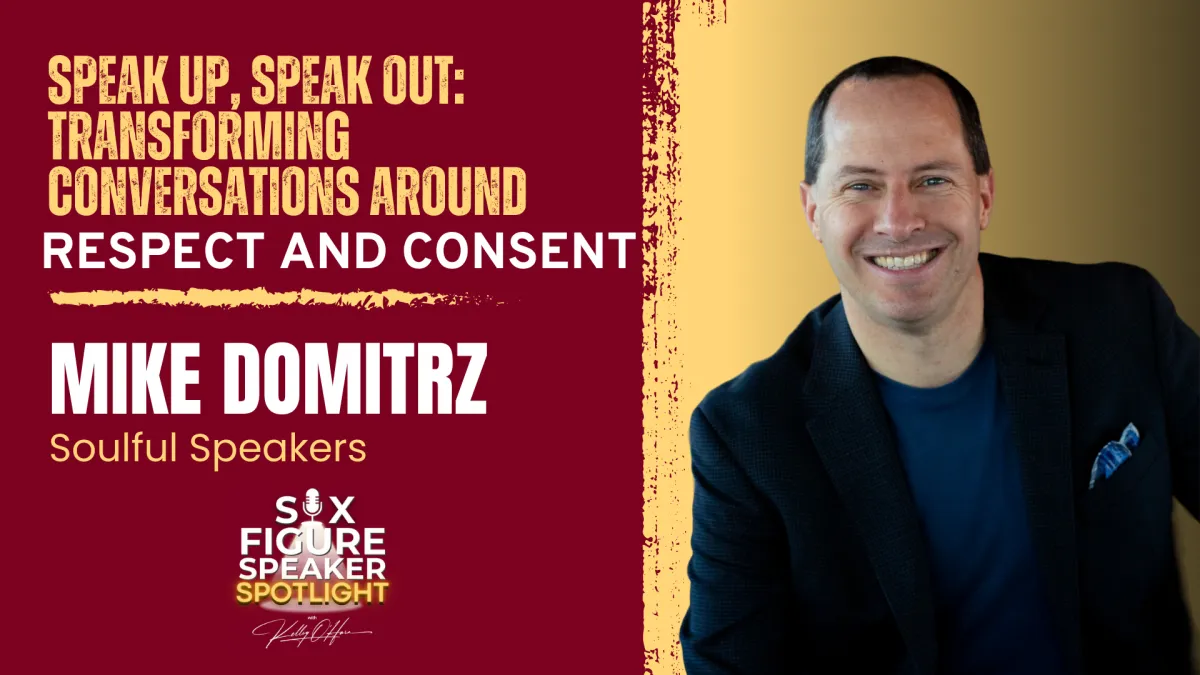
95-Speak Up, Speak Out: Transforming Conversations Around Respect and Consent
The Journey to Becoming a Six-Figure Speaker: Lessons from Mike Domitrz That Every Serious Speaker Needs to Hear
Some conversations leave you thinking differently. This one changed how I think about the responsibility of speaking.
I sat down with Mike Domitrz—Hall of Fame speaker, founder of The Center for Respect—and what followed was one of the most grounded, eye-opening interviews we’ve had. We didn’t talk hype. We talked substance. Purpose. And the reality of building a speaking business that’s built to do something, not just sound good on stage.
If you're in this game to make an impact and a living, keep reading. This one matters.
Where It All Started
Mike didn’t come to public speaking through marketing or branding. He came to it through pain. As a college freshman, he got a call that changed everything: his sister had been sexually assaulted.
That single moment reframed his entire future. He knew he had to speak up—about consent, communication, and respect. But early on, that message was a hard sell. Schools didn’t want to book a young guy to talk about sexual assault. He looked too young. The subject made people uncomfortable.
So he stepped back. Ran a business. Worked as a DJ. Coached high school swimming. But everything he was learning offstage—how to engage, how to read a room, how to lead—was preparing him for what came next.
Returning to the Stage—This Time with Structure
Years later, Mike found his way back to the mic—this time with strategy, thanks to the National Speakers Association (NSA). Through their support and training, he didn’t just build momentum. He built a business that’s now helped shape how people and organizations think about respect across the country.
He’s been doing this work for nearly three decades. And the strategies he shared? They’re tested, grounded, and ready for anyone who wants to build a career with real reach.
Mike’s Straightforward Framework for Building a Speaking Business with Substance
No fluff. No gimmicks. Just what works.
1. Inspiration Isn’t Enough—Give People Something They Can Use
Mike’s not interested in getting applause. He wants people to take what they’ve learned and apply it. Right away. That’s where the impact is.
What to do:
· - Build in clear, specific tools or strategies your audience can try that night.
· - Don’t just tell a story—teach through it.
2. Clear Communication Changes Everything—Especially in Relationships
Most people were never taught how to talk about consent or boundaries. Mike lays it out: healthy relationships require honest conversations. Period.
What to do:
· - Normalize direct questions like “Are you in the mood?”
· - Help audiences understand the difference between persuasion and pressure—and why respect always wins.
3. Find the Audience That’s Ready—and Speak Directly to Them
You don’t need to reach everyone. You need to reach the right people. Mike learned early that when he focused on those who already cared deeply about the issue, everything shifted.
What to do:
· - Define who your message is really for.
· - Speak to their concerns. Don’t dilute the message to please the masses.
4. Set Fees Based on Value and Experience—Not Just Ambition
Mike’s advice is clear: start with what makes sense for where you are, and grow from there. Jumping straight to premium pricing without traction or experience doesn’t help anyone.
What to do:
· - Consider what you need to earn—but match it with where your demand and skill level are right now.
· - Raise your rates as your results grow.
5. Perfection Is the Wrong Goal—Connection Is the Right One
Mike doesn’t use a word-for-word script. He engages with the audience. That doesn’t mean being unprepared—it means being present.
What to do:
· - Focus less on delivering a perfect talk and more on reading the room.
· - Be willing to adjust based on how your audience is responding.
6. Coaching Isn’t Optional—It’s a Smart Business Decision
Even with decades of experience, Mike still works with coaches. Why? Because growth isn’t a one-time project.
What to do:
· - Don’t wait for a problem to seek help.
· - Make coaching and feedback part of your ongoing professional development.
Respect Isn’t Just a Personal Issue—It’s a Workplace Issue Too
Mike’s work goes beyond individual relationships. He’s in corporate spaces now, helping teams address the subtle behaviors that chip away at culture and trust. Disrespect doesn’t always show up as yelling—it shows up in being dismissed, interrupted, ignored.
What to do:
· - Pay attention to the smaller behaviors that often go unchecked.
· - Lead conversations that raise awareness and change how teams interact.
Final Takeaway: Your Voice Has Weight—Use It Wisely
Mike Domitrz is proof that a message rooted in integrity, honesty, and action will always have staying power. He didn’t chase trends. He followed what mattered—and turned that into a full-time mission and a six-figure career.
If you’re building your path as a speaker, take this to heart:
· - Don’t aim to impress. Aim to serve.
· - Don’t wait for perfect. Show up prepared and honest.
· - And never underestimate what your voice can do when it’s focused on helping others live better, communicate better, and treat each other with more care.
That’s how real change starts.